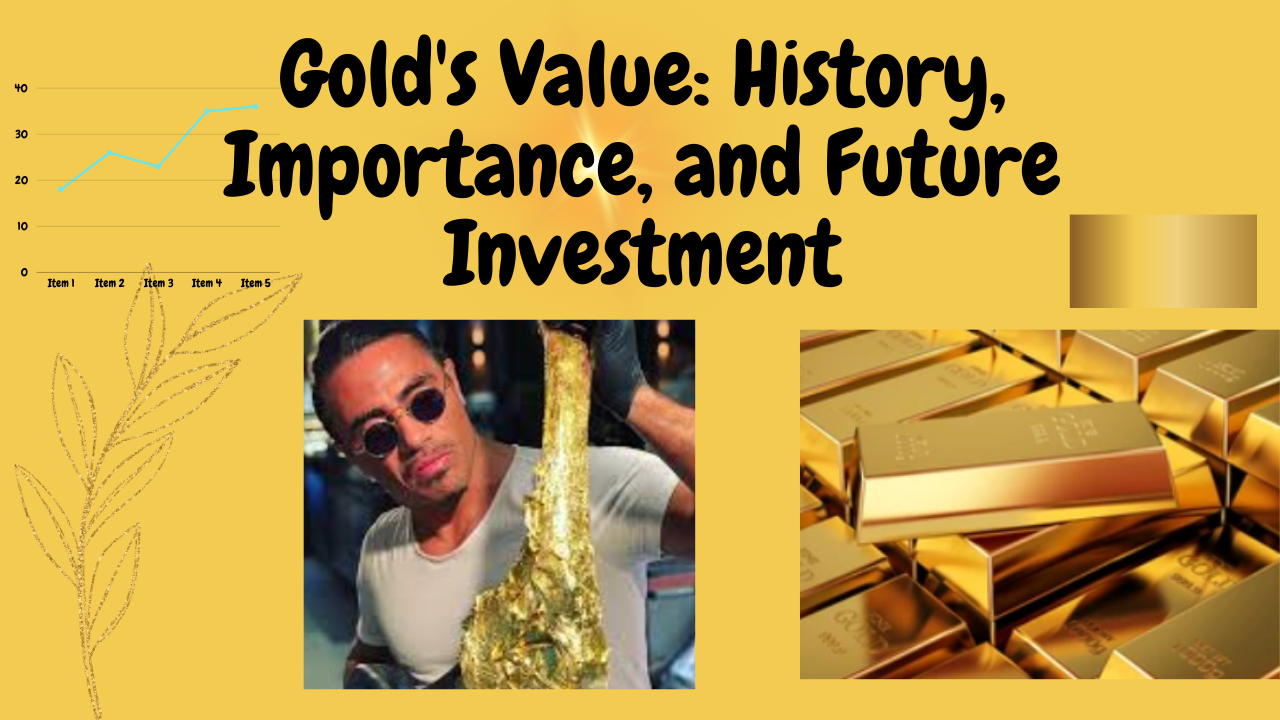
Gold has always been a symbol of wealth, power, and prestige. Throughout history, Gold’s value has been revered by civilizations for its rarity, beauty, and unique properties. But why is gold so valuable? What role does it play in our world today, and what does the future hold for this precious metal?
Why Is Gold So Valuable? (Gold’s Value)
Gold’s value is not just a modern-day phenomenon. Its appeal stems from several factors:
- Rarity: Gold is a rare element in the Earth’s crust, making it valuable. The difficulty of mining and refining gold adds to its allure.
- Durability: Gold does not tarnish or corrode, which means it retains its beauty and quality for centuries. This has made it a reliable store of value across generations.
- Malleability and Utility: Gold is highly malleable, allowing artisans to create intricate designs, jewelry, and artifacts. Additionally, it is a good conductor of electricity, finding use in various industrial applications.
- Cultural Significance: Gold has cultural and religious significance in many societies. In India, for example, gold is considered a symbol of purity, prosperity, and good fortune.
- Economic Stability: Gold is often seen as a safe-haven investment, particularly during economic downturns. When stock markets crash, currencies fluctuate, or inflation rises, investors flock to gold as a stable and enduring store of wealth.
The History of Gold
The history of gold dates back to ancient civilizations:
- Ancient Egypt: Egyptians saw gold as the “flesh of the gods,” and it was commonly used in the creation of pharaohs’ tombs, treasures, and religious artifacts.
- Greek and Roman Empires: Gold became central to the monetary systems of ancient Greece and Rome. Coins were minted from gold, and it facilitated trade across vast empires.
- Gold Rushes: In the 19th century, gold rushes in California, Australia, and South Africa drew thousands of people seeking fortune. These gold rushes transformed economies and even contributed to the formation of new cities.
- Gold Standard: In the 19th and early 20th centuries, many countries operated under the “gold standard,” where the value of currencies was directly tied to a specific amount of gold. Although the gold standard has been abandoned, gold still plays a key role in national reserves.
Gold’s Future: Will Its Value Keep Increasing?
Predicting the future of gold’s value is complex, but several factors suggest it will remain a valuable asset:
- Economic Uncertainty: During periods of economic crisis or geopolitical tension, gold often becomes more attractive as a safe-haven asset. As global uncertainties remain, demand for gold may continue to rise.
- Supply Constraints: Mining new gold is becoming increasingly difficult and expensive, with many of the richest deposits already depleted. Limited supply combined with sustained demand could lead to continued price growth.
- Inflation Hedge: Gold has long been considered a hedge against inflation. In an era of high debt levels and expansive monetary policy, many investors see gold as a reliable way to protect their wealth from currency devaluation.
However, there are potential challenges:
- Technological Advancements: New forms of investments, including cryptocurrencies, may present alternatives to gold, especially for younger generations who may view digital assets as the future of wealth storage.
- Environmental and Social Concerns: Gold mining has significant environmental and social impacts. As sustainability becomes a bigger global concern, this could affect demand and influence regulations in the gold industry.
Is Holding Gold Good for the Future?
While holding gold has traditionally been seen as a safe bet, its role in modern portfolios depends on personal circumstances and risk tolerance. Here are a few points to consider:
- Diversification: Gold is often used as part of a diversified investment portfolio. Its price movements are typically not correlated with stocks and bonds, making it a good asset for balancing risk.
- Long-Term Stability: Historically, gold has held its value over long periods, offering stability during volatile economic conditions. Investors view it as a store of value for wealth preservation.
- No Yield: Unlike stocks or bonds, gold doesn’t generate income. It can be a “dead asset” in terms of returns unless its price appreciates significantly. Investors who want to grow their wealth might balance gold holdings with other investments.
- Liquidity: Gold is a highly liquid asset, meaning it can easily be bought or sold when needed. This provides flexibility for investors looking to convert their assets into cash quickly.
Conclusion
Gold has retained its value throughout history due to its rarity, beauty, and unique properties. Its role as a store of wealth, especially during times of economic uncertainty, remains crucial. While the value of gold is likely to continue increasing, especially as global uncertainties persist, it is important to approach gold as part of a broader investment strategy. Holding onto gold may indeed be good for the future, but, as with any asset, it should be balanced with other investments to mitigate risks and maximize opportunities.
Similar blogs :