

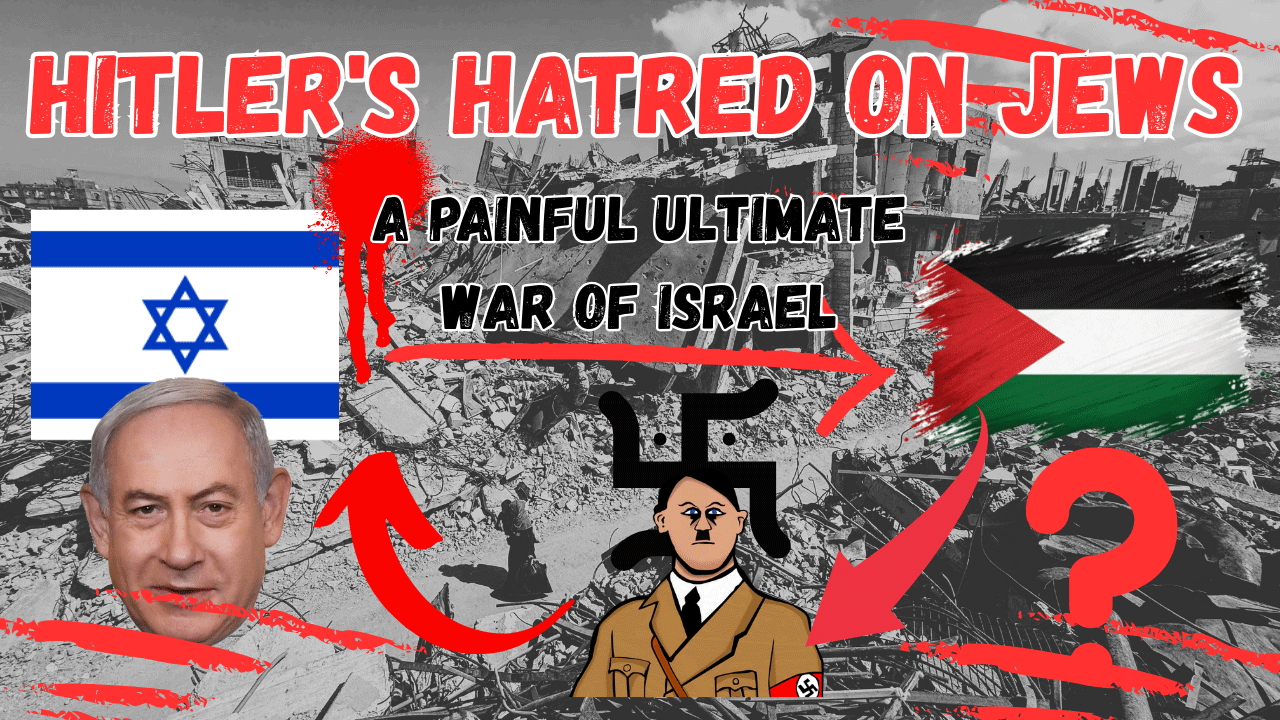
The Holocaust stands as one of the most horrific events in human history. The systematic murder of six million Jewish men, women, and children by Nazi Germany was so monstrous that a single, simple question continues to haunt us: Why? Why did Adolf Hitler and the Nazi regime harbor such a profound hatred for Jewish people? (Hitler’s Hatred On Jews)
The answer is not simple. It wasn’t based on reality, but on a dangerous cocktail of ancient prejudices, political lies, fake science, and personal obsession. Understanding this dark chapter isn’t just about history; it’s a crucial lesson in how hatred can be manufactured and manipulated to catastrophic ends.
1. The Ancient Foundation: Centuries of European Antisemitism
First, it’s vital to know that Hitler didn’t invent antisemitism. He expertly exploited prejudices that were already centuries old.
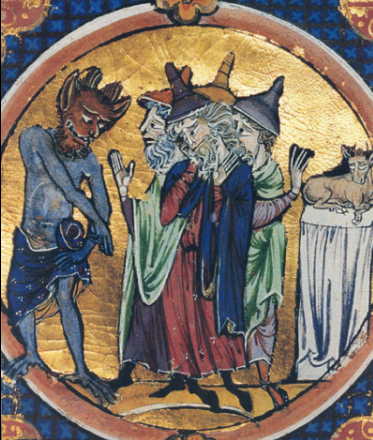
Throughout European history, Jewish communities were often used as scapegoats. They were falsely accused of:
- Deicide: Killing Jesus Christ.
- Blood Libel: Using the blood of Christian children in rituals.
- Spreading the Black Death.
- Economic Exploitation: Because they were often barred from owning land or joining guilds, many Jews worked in finance and trade. This made them targets of resentment during hard times, stereotyped as “greedy bankers” or “profiteers.”
This long history created a fertile ground for Hitler’s more extreme, racialized version of hatred.
2. The Political Lie: The “Stab-in-the-Back” Myth (Hitler’s Hatred On Jews)
After Germany’s shocking defeat in World War I, a powerful lie began to circulate among angry nationalists. They refused to believe their mighty army could have been defeated fairly. Instead, they claimed the troops were “stabbed in the back” (Dolchstoßlegende) by traitors at home—specifically politicians, communists, and Jews.
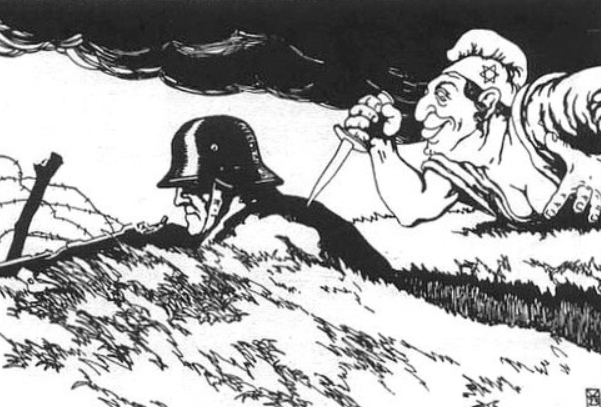
This myth was completely false, but it was incredibly effective. Hitler, a WWI veteran, fervently believed it. He used it to unite people against a common enemy, blaming Jewish people for Germany’s humiliation, economic ruin, and national shame.
3. The Conspiracy Theory: “International Jewry” (Hitler’s Hatred On Jews)
The Nazis promoted a bizarre and contradictory conspiracy theory that Jews were plotting to control the world. They pointed to two opposing forces:
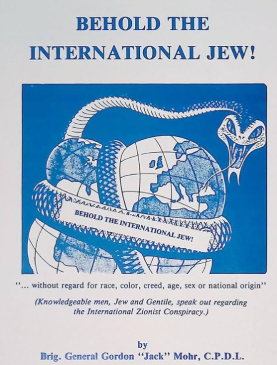
- Judeo-Bolshevism: The idea that Jews were the masterminds behind communism, which sought to destroy nations, religion, and the social order.
- Jewish Capitalism: The idea that powerful Jewish bankers were manipulating the global economy for their own greedy ends.
How could they be behind both? Logic didn’t matter. This conspiracy theory became a catch-all explanation for any problem, creating a powerful and invisible enemy for Hitler to rally against.
4. The Pseudoscience: Racial Hierarchy (Hitler’s Hatred On Jews)
In the late 19th and early 20th centuries, the now-debunked idea of “scientific racism” became popular. It claimed humanity was divided into distinct races with the “Aryan” or Nordic race at the top.
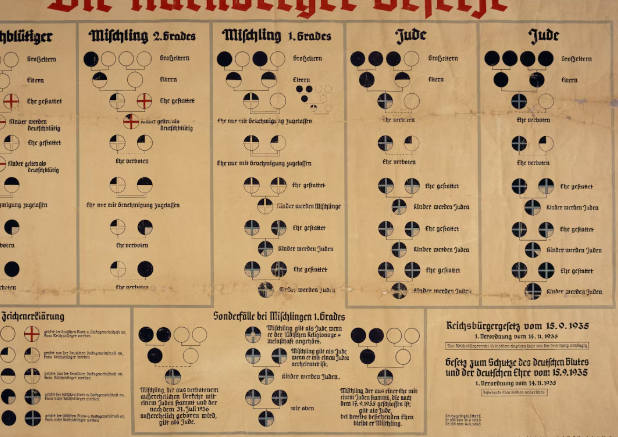
In this twisted worldview, Jews were not defined by their religion but as an inferior and dangerous race. Nazi propaganda depicted them as parasites, viruses, or bacteria infecting the pure “Aryan” body of Germany. This dehumanization was a critical step. It’s much easier to justify persecuting, segregating, and eventually killing people you don’t see as human.
5. The Personal Obsession (Hitler’s Hatred On Jews)
While the conditions were ripe, the driver was Hitler’s own fanatical belief. His time as a young man in Vienna exposed him to extreme antisemitic rhetoric. Historians debate specific personal grievances—perhaps rejection from art school or a need to blame others for his own failures. Whatever the root, his hatred was deeply personal and formed the core of his political ideology, detailed in his 1925 book, Mein Kampf (“My Struggle”).
From Hatred to Holocaust (Hitler’s Hatred On Jews)
This hatred wasn’t just rhetoric; it was a deliberate political strategy that escalated into genocide.
- A Unifying Tool: Antisemitism was a powerful rallying cry that united Hitler’s base.
- A Scapegoat: Blaming Jews for all of Germany’s problems diverted anger away from the Nazi party’s failures.
- Legal Persecution: It started with laws stripping Jews of their rights (the 1935 Nuremberg Laws).
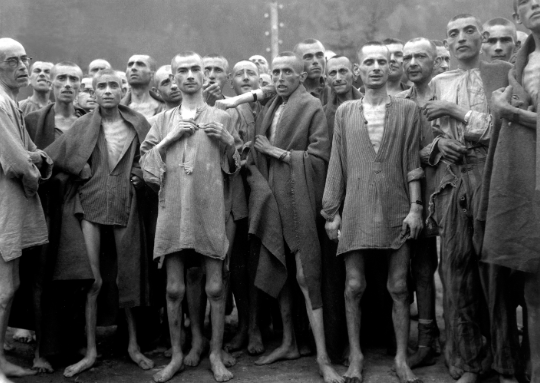
- Systematic Genocide: It ultimately escalated into the Final Solution—the industrialized murder of millions in concentration camps during World War II.
Conclusion: A Lesson in Vigilance (Hitler’s Hatred On Jews)
Hitler’s hatred of Jews was not a simple personal flaw. It was the culmination of historical prejudice, amplified by political lies, packaged as fake science, and executed with ruthless efficiency.
Understanding this is not an academic exercise. It is a stark reminder of how ancient prejudices can be weaponized, how lies can be sold as truth, and how the dehumanization of any group of people can lead to unthinkable atrocities. It teaches us to be vigilant against hate speech, question conspiracy theories, and always defend the humanity and dignity of others.
We remember the past to protect the future.
A Painful Parallel: Historical Trauma and Modern Conflict
The history of the Holocaust is not just a closed chapter. Its memory, lessons, and very language are intensely alive and deeply intertwined with the modern conflict between Israel and Palestine. For many, drawing a direct line from the Holocaust to the present is inevitable, but it is also a minefield of interpretations, accusations, and profound pain on all sides.
It is essential to state clearly: The modern Israeli-Palestinian conflict is a distinct political and territorial struggle with its own long history. However, the shadow of the Holocaust looms over it in several critical ways, influencing the perspectives of the key players and the global audience.

Here’s how the two are connected in the modern discourse:
1. For Israel and Many Jews: “Never Again” as a Founding Principle
The central lesson the Jewish people took from the Holocaust was “Never Again” (Never wieder). This is not a slogan; it is a core national security doctrine for the State of Israel, established just three years after the end of WWII.
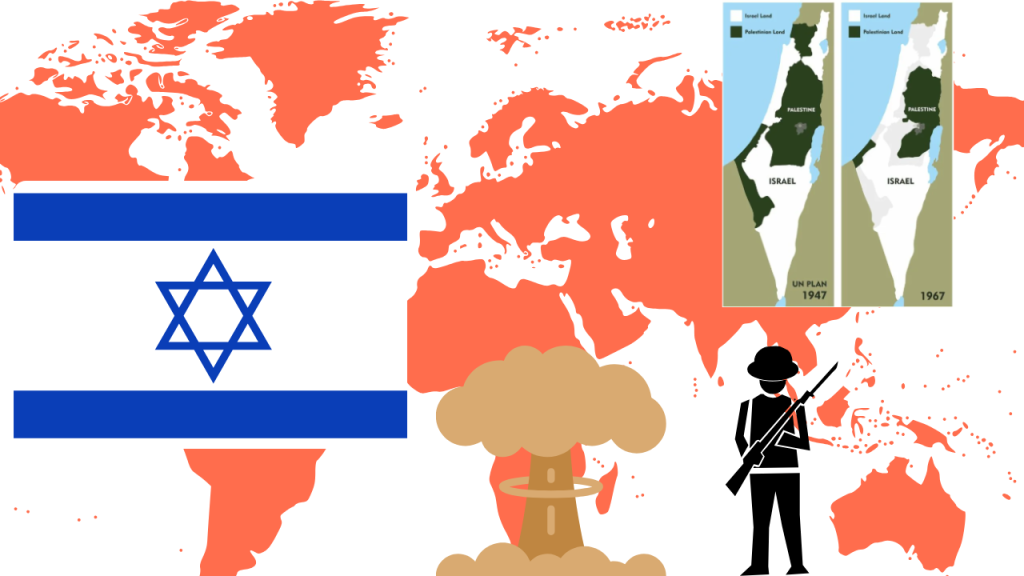
- The Need for a Sovereign State: The Holocaust was ultimate proof, for Zionists and many others, that without a state and an army to defend themselves, Jews were vulnerable to existential threats. The modern State of Israel sees itself as the guarantee that Jewish people will never again be powerless in the face of annihilation.
- Perception of Existential Threats: When Israeli leaders or citizens hear rhetoric from groups like Hamas (whose 1988 charter contained explicitly antisemitic language and called for Israel’s destruction) or from Iran (which has called for Israel to be wiped off the map), they do not hear it as political hyperbole. They hear echoes of the Nazis. This frames the conflict not as a dispute over borders, but as an existential struggle.
- The World’s Silence: There is a deep-seated trauma rooted in the world’s silence during the 1930s and 40s. This leads to a determination to never rely on international bodies for security and a deep skepticism toward outside criticism, which is often perceived as hypocrisy or, in some cases, a continuation of antisemitism.
2. For Palestinians and Their Supporters: The Accusation of “Using the Holocaust” (Hitler’s Hatred On Jews)
From the Palestinian perspective, this linkage is often seen as instrumentalization of their suffering.
- The “Nakba” as a Counter-Narrative: While Jews were suffering the Holocaust in Europe, the Arab population in Palestine was facing a different crisis. The 1948 war that established Israel led to the Nakba (“catastrophe”), the displacement and dispossession of hundreds of thousands of Palestinians. Many Palestinians and their supporters argue that they were forced to pay the price for European crimes. This creates a deep sense of historical injustice.
- Accusations of Holocaust Instrumentalization: Critics argue that Israel uses the memory of the Holocaust to shield itself from criticism of its policies toward the Palestinians, particularly the occupation of the West Bank, the blockade of Gaza, and military operations that result in civilian casualties. Labeling any criticism as “antisemitism” is seen as a tactic to silence legitimate political dissent.
- Inversion of the Holocaust Imagery: In the most extreme and inflammatory rhetoric, some anti-Israel propagandists deliberately use Nazi imagery to describe Israelis, calling them “Nazis” and comparing Gaza to a “concentration camp.” This is widely condemned by historians and serious commentators as a profound trivialization of the Holocaust and a form of modern antisemitism. However, its use reflects a desperate and malicious attempt to flip the script of victim and perpetrator.
3. For the Global Audience: A Polarized Lens
The world watches this conflict through the lens of the Holocaust, leading to intense polarization.
- Solidarity with Israel: Many, particularly in the West, see support for Israel as a moral obligation rooted in atonement for the Holocaust and a commitment to Jewish safety.
- Solidarity with Palestine: Others, particularly younger generations and those in the Global South, see the Palestinians as the victims of a colonial project and view Israel through the lens of a powerful, nuclear-armed state oppressing a stateless people. They see the Holocaust as a historical tragedy that does not justify the ongoing displacement of another group.
- The Danger of Equivalency: There is a constant, and often flawed, temptation to draw direct equivalencies. The Holocaust was a unique, state-driven, industrial project of exterminating every Jewish person on earth. The Israeli-Palestinian conflict is a brutal, asymmetric national and territorial struggle. Equating the two is historically inaccurate and often serves to inflame passions rather than foster understanding.
Conclusion: Navigating the Unthinkable (Hitler’s Hatred On Jews)
The correlation between the Holocaust and the Israel-Palestine conflict is not one of direct causation but of perception, trauma, and political instrumentalization.
- For many Jews, the Holocaust is the primal trauma that explains Israel’s existence and its fierce determination to survive.
- For many Palestinians, the Holocaust is the historical justification used for their own displacement and ongoing statelessness.
This creates an almost impossible chasm of understanding, where each side’s deepest historical pain is seen by the other as a weapon against them.
The path forward requires acknowledging both truths: the Jewish people’s existential fear born from the Holocaust is real and valid, and the Palestinian people’s experience of displacement and occupation is real and valid. Dismissing either only perpetuates the cycle.
Understanding the Holocaust, therefore, is not about taking sides in a modern political conflict. It is about understanding the catastrophic end result of dehumanization. That lesson applies universally: to the rhetoric used against Jews, against Palestinians, and against any group. The call to “Never Again” must mean never again for anyone. The moment it is used to justify the suffering of one group over another, its moral power is lost, and the lessons of history are betrayed.
Similar Blogs :



Your article helped me a lot, is there any more related content? Thanks! https://www.binance.com/register?ref=L4EUT9FG