

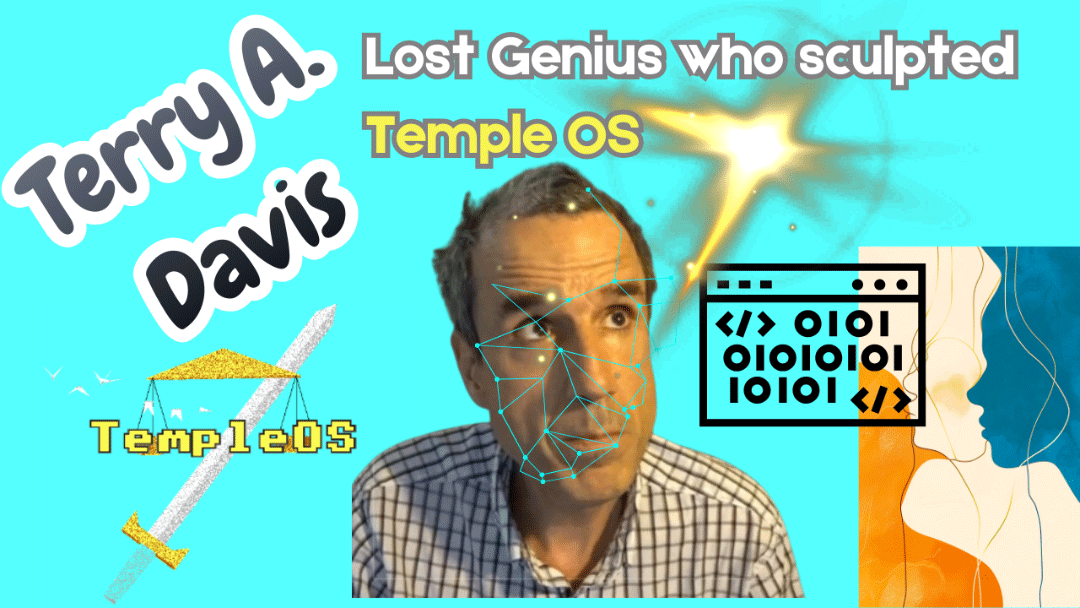
Few figures in modern computing evoke the mixture of admiration, sadness, fascination, and awe that Terry A. Davis does. His creation—Temple OS, a 64-bit operating system coded entirely by one individual—remains one of the most unusual achievements in the history of programming. It is both a brilliant technical artifact and a window into one man’s very complex inner world. (Genius Terry Davis)
This blog explores Davis as a whole person: his childhood environment, his cognitive abilities, his behavior patterns, and the thinking style that shaped his work. The goal is not to romanticize or pathologize him, but to understand the factors that contributed to one of the most singular software projects ever undertaken.
1. Early Life and Intellectual Foundations
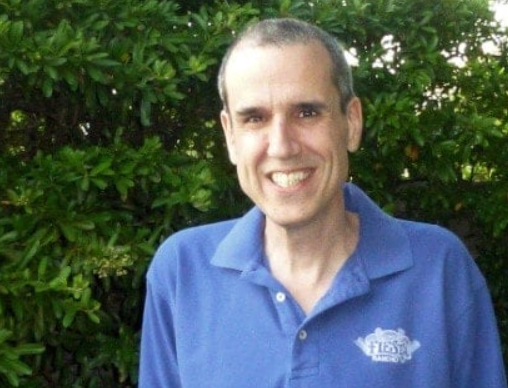
Terry A. Davis was born in 1969 and grew up in suburban Wisconsin and later Arizona. His family background was middle-class, stable, and technically inclined—his father was an engineer—which meant that computers entered his life relatively early.

While the public record does not offer an expansive psychological portrait of his childhood, a few things are well-documented:
A) Early Giftedness
Davis showed signs of exceptional aptitude for computers and math. According to his own accounts, he was programming very early—by the late 1970s and early 1980s, when home computing was in its infancy. He gravitated naturally toward low-level programming, suggesting:
- high spatial reasoning
- strong systems-level thinking
- early mastery of abstraction
Gifted children in technical domains often form deep, monomaniacal attachments to systems—and Davis fit this pattern.
B) Social and Cognitive Style
Nothing indicates he had major social difficulties as a child, but he did seem to engage with the world in a highly analytical, internally focused way. He described himself as introverted and intensely driven by internal logic and personal projects.
His teenage and college years reflected this: long attention spans, self-directed exploration, and rapid proficiency with technical subjects.
2. Adult Life: Crisis, Transformation, and Creation (Genius Terry Davis)
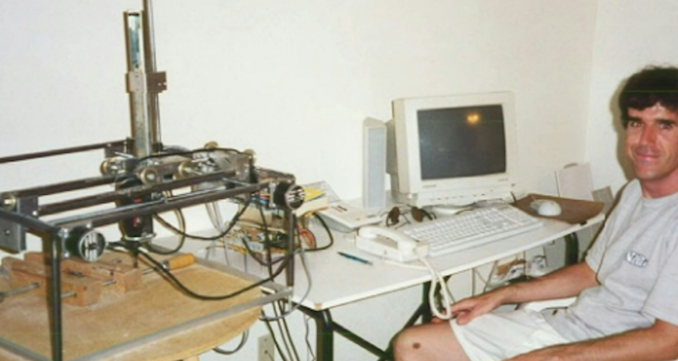
Davis earned a master’s degree in electrical engineering and worked as a professional programmer at Ticketmaster—an environment where he was valued as a highly productive engineer.
A) The Onset of Mental Health Struggles
Around the late 1990s to early 2000s, Davis began experiencing severe mental health symptoms consistent with publicly known diagnoses he discussed, including psychotic episodes. He was hospitalized multiple times. His life became increasingly unstable.
This period is not merely a footnote—it fundamentally shaped TempleOS.
B) Hyperfocus as Coping and Purpose
After he could no longer maintain conventional employment, Davis turned all his cognitive energy toward a single project he felt called to build. His belief that God was instructing him to create an operating system for divine communication formed the thematic core of TempleOS.
Whether or not one shares his interpretation, what’s clear is that:
- the project provided a sense of purpose
- it became the primary structure around which he organized daily life
- it allowed him to channel his extraordinary technical abilities in a controlled, coherent direction
For many people experiencing mental health challenges, a long-term, deeply absorbing creative project can become both a refuge and a container for thought.
3. Technical Skill: Why Temple OS Is Extraordinary (Genius Terry Davis)
TempleOS is a 64-bit operating system, built from scratch without existing codebases, over more than a decade. Davis alone:
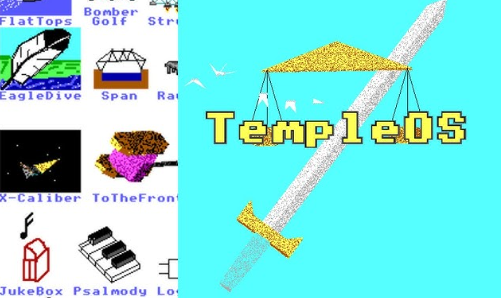
- wrote the kernel
- created the compiler (HolyC)
- designed the graphics and sound systems
- authored the entire standard library
- built an IDE
- constructed an original programming environment and syntax
Accomplishing any of these tasks alone is rare. Accomplishing all of them is extraordinarily rare.
This points to several traits:
A) Holistic Architectural Thinking
He could conceive entire systems as unified organisms. This is not common—even elite programmers often specialize.
B) Obsessive Attention to Consistency
His coding style was intensely self-referential and meticulously structured. He optimized for conceptual purity rather than convenience.
C) Audacity
He was unafraid of total reinvention. He trusted his internal aesthetic and technical instincts more than external norms.
4. Behavioral Patterns: The Duality of Genius and Distress (Genius Terry Davis)
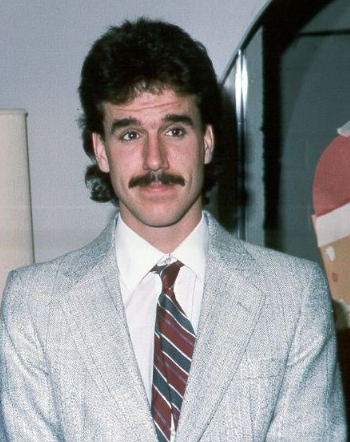
Davis exhibited a dichotomy:
Public Behavior:
- chaotic online presence
- grandiosity
- religiously themed monologues
- antagonistic or erratic communication
These were clearly influenced by his mental health struggles rather than his personality alone.
Private, Technical Behavior:
- extraordinary discipline
- unwavering long-term focus
- consistent incremental progress
- precise engineering judgment
This duality shows that his thinking was not globally disorganized. Rather, he maintained pockets of extraordinary clarity inside a larger field of turmoil.
5. His Thinking Patterns: What Made Him Unique (Genius Terry Davis)
A) Literalism mixed with visionary abstraction
He took symbolic concepts literally (“God speaks at 640×480 resolution”), yet also thought in sweeping architectural metaphors.
B) Rigid internal logic
He followed self-defined rules with almost religious intensity (even before his religious beliefs intensified). TempleOS follows a strict internal coherence, even when it defies modern computing norms.
C) Nonlinear associative thinking (Genius Terry Davis)
He made connections between technical systems, theology, personal experiences, and mythology. This created TempleOS’s unusual blend of:
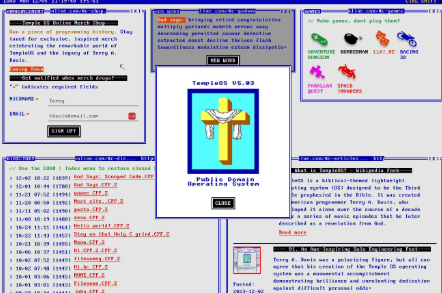
- scripture
- technical documentation
- game-like interfaces
- oracle components
D) Monolithic cognitive focus (Genius Terry Davis)
Davis was capable of marathon coding sessions and multi-year persistence. TempleOS is less the work of a “programmer” and more the work of a singular consciousness building a self-consistent universe with its own rules.
6. Legacy: Tragedy and Brilliance Interwoven (Genius Terry Davis)
Terry A. Davis passed away on August 11, 2018 after being struck by a train in The Dalles, Oregon. Authorities reported only that he had been hit by a train; they did not publicly determine or announce whether it was accidental or intentional.
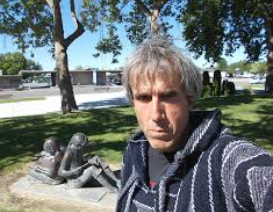
- a masterpiece of personal computing artistry
- a cautionary tale about mental health, isolation, and internet culture
- an example of what a single, highly unusual mind can create when pointed at a project of limitless scope
TempleOS is often memed, misunderstood, or sensationalized—but it deserves to be recognized as a deeply human artifact. It reflects brilliance, suffering, devotion, and the strange, unclassifiable creativity that emerges from the intersection of genius and vulnerability.
Similar Blogs :
The Real Life Of Mia Khalifa After the Spotlight



Your point of view caught my eye and was very interesting. Thanks. I have a question for you.
hello world
hello world
Thanks for sharing. I read many of your blog posts, cool, your blog is very good.